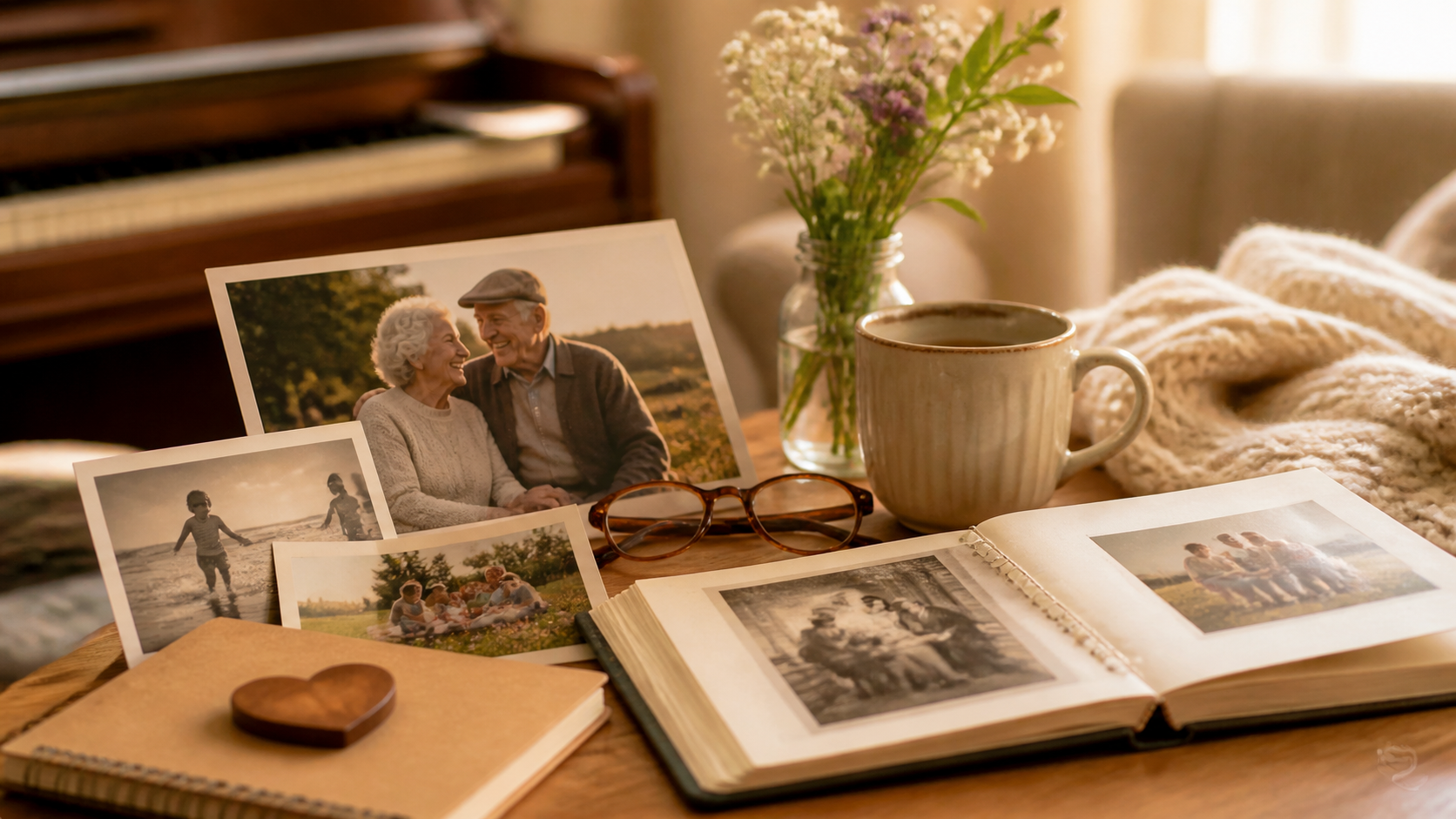
Finding a gift for Grandma or Grandpa can be easier when, instead of looking for another thing, you look for a way to remember what matters to your family. A personal song can capture shared experiences, small family traditions or words you associate with the person receiving it. It doesn't have to tell their whole life story. Sometimes a few specific details are enough to make the dedication truly your own.
Why a song can be a personal gift
A song offers room for both a story and a message. It can bring to mind a moment the family loves to revisit, thank someone for something specific or express a closeness that can sometimes be hard to describe in everyday words. Its personal meaning doesn't depend on it being grand. Often, it's the little things that create it: a place you used to go together, a family custom or a phrase the person has been saying for years.
Everyone is different, so it is worth thinking about whether this kind of dedication would feel right for your grandma or grandpa. Some people appreciate a public, elaborate surprise, while others prefer a quiet presentation among close family. A personal song may not suit every occasion or personality; what matters is what feels right for the person receiving it.
How to choose memories worth capturing
Start with a few questions: Which shared experience comes to mind first? What tradition do you keep at family gatherings? Is there a place, food or time of year associated with your grandparent? Your answers can help you find a theme for the song without trying to cover too many events at once.
It can help to choose memories from a few different areas:
- Shared experiences: a trip, a visit, a holiday or an ordinary afternoon you remember fondly.
- Family traditions: how you celebrate holidays, what is regularly served at the table or how you spend time together.
- Favorite sayings: words or expressions that are typical of the person and recognizable to the family.
- Small everyday moments: a journey together, a conversation, a garden or another little thing that captures your relationship.
You don't have to use everything that comes to mind. Choose a few related themes and try to put into words why they matter to you. A specific detail is often more meaningful than general words about someone being wonderful. And there is no need to add circumstances you don't remember for sure. If family members disagree about how a memory unfolded, you can describe it from your own perspective.
Details that help capture the person receiving the gift
As you prepare, make a note of what is typical of your grandma or grandpa: their sense of humor, what they enjoy doing, which places are special to them or how they approach family gatherings. The goal isn't to create a complete portrait or rely on assumptions about all grandparents. Choose only what you really know and what you think the person would be happy to hear.
A short list of facts and feelings can also help. Alongside a specific memory, write down what it means to you: for example, a sense of calm, the joy of spending time together or gratitude for their support. These notes can help you find a balance between telling a story and sharing a personal message. If you're unsure whether a detail belongs in the song, consider whether you would feel comfortable hearing it at a family gathering.
Tailor the dedication and tone of the song to the person
The dedication can be simple: who the song is for, the occasion and what you want to say. It doesn't need a formal declaration or a lengthy explanation. A sincere sentence about what you're grateful for or a shared moment you remember fondly can be a good place to start.
Think about the tone in the same way. If the person enjoys humor, the song might include a gentle joke or a familiar family saying. If they prefer a quieter expression, a tender and personal dedication may be more suitable. Also consider the occasion and how you will present the gift. The tone should suit the person, not just what the gift-giver imagines will be moving or celebratory.
How to involve other family members
Reach out to a few people who know the person from different stages of life or in different situations. You can ask them to send one favorite memory, a family tradition or a phrase they associate with them. It helps to ask simple questions and set a deadline for replies. It doesn't need to be a long story; sometimes a few sentences are enough to remind you of something you might not have thought of yourself.
Then choose together the themes that recur or naturally go together. If memories differ, there's no need to decide who is right. You can choose one specific perspective or include only what everyone agrees on. Involving the family should enrich the process, not create pressure to participate or share personal experiences.
Personal stories and privacy
Not every family memory is suitable to include in a song. Stories involving health, loss, conflict or other sensitive circumstances deserve particular care. Consider who the story is about and whether they would agree to this information becoming part of a gift. Even a story the family knows can be personal to someone.
If you're unsure, leave out the detail or ask the person concerned first. A song can still feel personal without sensitive details: you can capture closeness, support or time spent together without revealing something someone would rather keep private. Respecting your family's wishes is more important than telling the whole story.
Once you've chosen the memories, dedication and tone, you can use them to prepare the material for your own song. Stick to details that are true, meaningful to the person receiving it and comfortable to share. That's how shared stories can give a gift personal meaning without saying more than your family wishes to share.