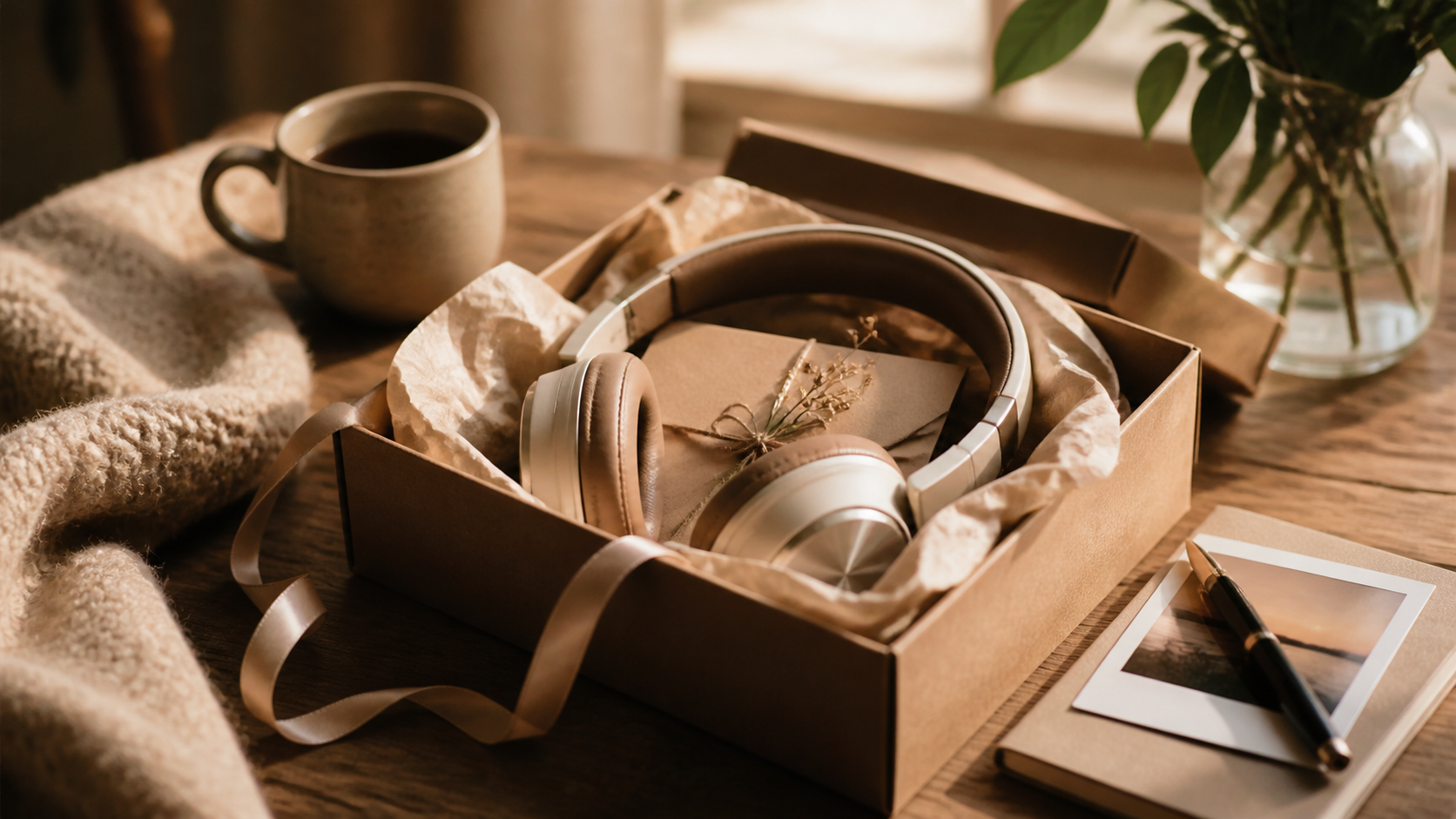
Choosing a gift for someone close to you can be enjoyable, but sometimes a little challenging too. You want it to be more than just another thing—to show that you know the recipient and put thought into choosing it. A personal gift doesn’t have to be big, expensive, or complicated. Often, it’s enough for it to reflect the person, your relationship, or a moment you share.
There is no one type of gift that suits everyone. Some people appreciate something practical, while others prefer a shared experience or a reminder of an important memory. So when deciding, it helps to start with the recipient, think about the occasion, and consider how personal the gift should be. These questions can narrow down your options and help you find something that feels right for your relationship.
What makes a gift personal
A personal gift is rooted in something specific: the recipient’s interests, needs, memories, personality, or your relationship with them. It doesn’t have to have their name on it or be custom-made. A book by a favorite author, a trip to a place they’ve talked about, or a small item that brings back a shared experience can all be personal gifts.
What matters is that the choice makes sense for the person you’re giving it to. An item with a dedication can feel personal, but personalization alone doesn’t guarantee that it will be a good fit. Conversely, a gift without a name on it can mean a lot if it connects to an interest, a conversation, or an experience you share.
Start with the recipient
Think about what the person enjoys and how they spend their time. Are they interested in music, cooking, sports, reading, or perhaps a particular place? Have they recently mentioned something they could use or an experience they’d like to try? You don’t have to look through lists of universal gifts for answers. It often helps to think back to everyday conversations and what’s currently going on in the recipient’s life.
Also consider their habits and preferences. Do they prefer things they can use, or do they enjoy spending time together more? Do they like surprises, or would they rather have a choice? Do they enjoy grand gestures, or are they more comfortable with something understated? The aim isn’t to put someone in a fixed category, but to choose a gift with their comfort in mind.
If you’re not sure whether they would use a particular item, consider whether the gift would bring joy, comfort, or a pleasant moment together. For a practical gift, it’s worth checking that it suits the recipient’s needs. For an experience, think about their interests, what’s feasible for them, and whether that type of activity would suit them.
Consider the occasion and your relationship
One gift might suit a birthday, another an anniversary, a name day, or a thank-you. The occasion can help you decide whether the gift should be celebratory, small, practical, or connected to a particular moment. But there’s no obligation to stick to a specific style. Even for an important event, a simple gesture may be more fitting than an extravagant one.
Your relationship matters too. A gift for a partner might refer to experiences you’ve shared, while something less intimate may be better for a colleague or a more distant relative. With more personal gifts, consider whether the recipient would appreciate references to shared memories or more sensitive topics. What one person finds sweet might feel too private to someone else.
Draw on shared memories and interests
A memory can be a good starting point if it’s important to both of you. It could be a place you like to return to, a trip you took together, a family tradition, or a small moment you often remember. A gift doesn’t have to simply describe the memory; it can offer a way to build on it, such as with a trip together or an activity you both enjoy.
You can also draw on the recipient’s hobbies. Just make sure you’re choosing something that reflects their genuine interest, rather than just your idea of what they like. If you’re not sure about specific equipment or their taste, a related experience, a gift card that lets them choose, or an accessory that’s unlikely to go unused might be a better option.
A personalized gift can take many forms
There are many ways to give a gift personal meaning. It could be a dedication, a photograph, a handmade item, a shared experience, or something created around the recipient’s story. A custom-made song is another option. It could be a good fit for someone who loves music, or a personal gift for a birthday, anniversary, or another occasion you want to connect with shared memories.
A custom-made song won’t be the right choice for everyone. Consider whether the recipient enjoys music and personal gestures, and whether they’d be comfortable with a gift that draws on their story. If you’d like to see what creating a song of your own can look like, you can explore SongLab’s options. As with any gift, what matters most is whether it suits the person you’re giving it to.
How to think through your choice in advance
Before buying a gift, try answering a few simple questions: What does the recipient like? What do you share? What’s the occasion? Would the gift make them feel comfortable, or might it seem too personal? And is it something they’ll actually use or enjoy? If you’re unsure, it might help to ask someone who knows the recipient well. Just be careful not to give away the surprise, if that matters.
It can also help to picture the moment when you give the gift. How might the recipient react? This isn’t a prediction that can guarantee the outcome, but a way to check whether the gift suits their personality and the situation. If you’re unsure, it’s fine to choose a less personal option or let the recipient be part of the decision.
A personal gift doesn’t have to be perfect or exceptional by someone else’s standards. It gets its meaning from the thought you’ve given to a specific person. Whether it’s a good fit always depends on the recipient, their interests, your relationship, and the circumstances. Taking these things into account can help you choose a gift that feels natural and reflects what you want to say.

 Song language: Czech